A curatorial spotlight on select artists and contexts from the exhibition.
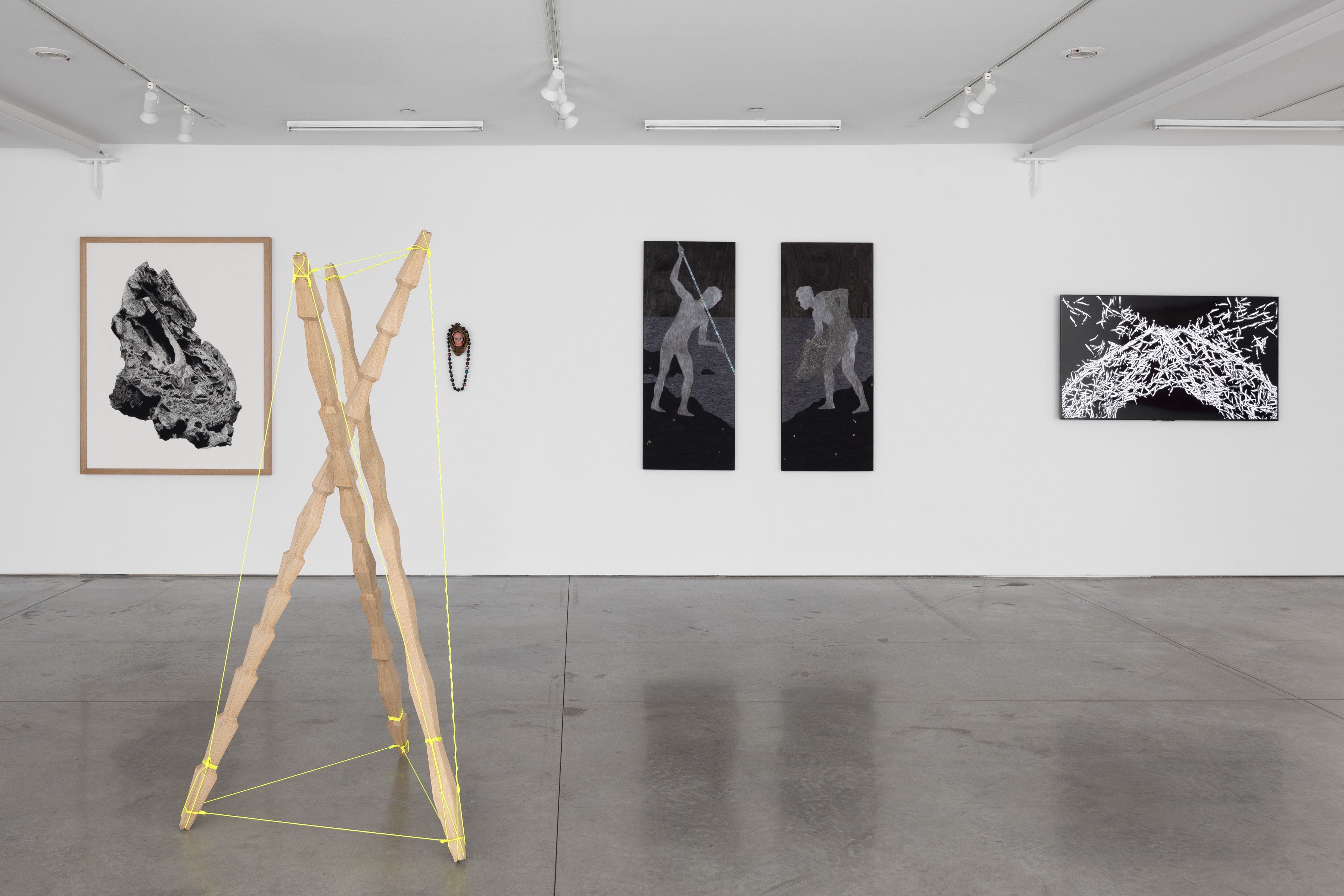
Installation view, Niu Systems, Ryan Lee Gallery, New York, 2026. From left: Nicole Parente-Lopez, Black Point Flow; Sean Connelly, Spears, 2025; Lawrence Seward; Dane Nakama, Night Fishing at Puʻuloa, 2026; Kaili Chun, 1843, 2026.
Hawaiian contemporary art is at an inflection point. For decades, the global art world's engagement with Hawaiʻi has been largely retrospective, recognizing work whose significance is measured by historical distance and artists whose institutional validation has come late or posthumously. That relationship is changing. A generation of artists working from deep engagement with Ahupuaʻa, the Indigenous Hawaiian system organizing land, water, and stewardship along corridors from mountain to sea, is producing conceptual work in active, unmediated dialogue with global contemporary art discourse. Niu Systems brings thirteen of these artists to Ryan Lee Gallery in New York, centering the practices of Nanea Lum, Kaʻili Chun, and Sean Connelly, each treating the ʻāina not as subject or symbol but as structural logic: a rigorous, place-specific framework for both making and thinking. That Kainoa Gruspe, selected for the 2026 Whitney Biennial, is also in the show is a measure of how fully this moment has arrived.
For those new to Sean Connelly's practice, this video is the most direct entry point available. It follows Connelly and architect Dominic Leong, co-founders of Hawaiʻi Non-Linear, as they make visible what colonial urbanism has buried: the sacred sites, watershed systems, and spatial logics of an Indigenous Honolulu concealed beneath military installations at Diamond Head, Punchbowl Crater, and Fort DeRussy Beach. His tools, including experimental cartography, oral history, and what he calls "geo-perception," are not documentary in intent but regenerative. The work asks not only what was here but what can be recovered and actively practiced again. That methodology, treating land not as landscape but as living knowledge system, is the conceptual spine of Niu Systems, and watching this video before moving through the show reframes what every artist in the exhibition is doing, across sculpture, painting, video, ceramics, and material practice alike.
Dr. Sean Connelly
b. 1984, Honolulu · Kanaka Hawaiʻi · spatial practice, sculpture, film
Indigenous architectural cartography: holding land, water, architecture, and power in a single frame.
Education and Teaching
Harvard GSD MDesDoctorate of Architecture, UH MānoaTaught Columbia GSAPP
Selected Recognition
The Met Permanent CollectionCooper Hewitt Design Triennial 2024NYU A/P/A Residency 2025MoMA Built Ecologies
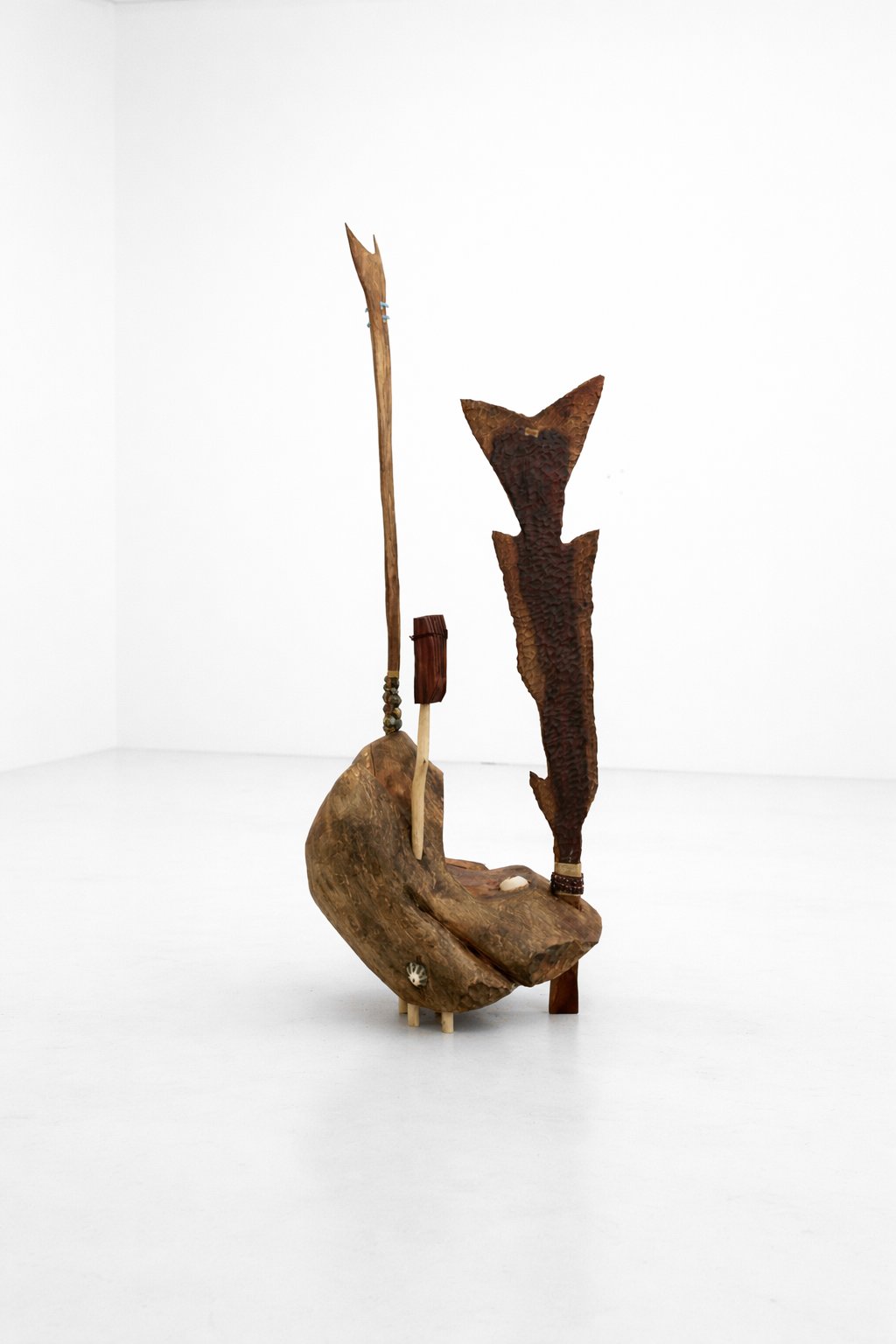
Hybrid, 2025 Maple wood, cord · 10 × 30 × 60 inSpears, 2025 Oak wood, cord · 23 × 28 × 76.5 in
On the 3rd floor of “Making Home—Smithsonian Design Triennial,” After Oceanic (@afteroceanic) and Leong Leong (@leong__leong) present a hale (building) that embodies grassroots efforts to care for ʻāina—a Native Hawaiian term for land, meaning “that which feeds.” This scalable design builds upon aspects of Indigenous Hawaiian architecture, adapting traditional hale and waʻa (canoe) lashing techniques—using cordage to secure built structures without metal fasteners—for contemporary architectural construction.
Kainoa Gruspe
b. 1995, Louisville, KY · based Honolulu · painting and sculpture
Painting pushed off the wall and into the landscape. Value, duration, and absurdity, with the labor left visible.
Education and Teaching
Slade School of Fine Art, London MFAUH Mānoa BFA and faculty
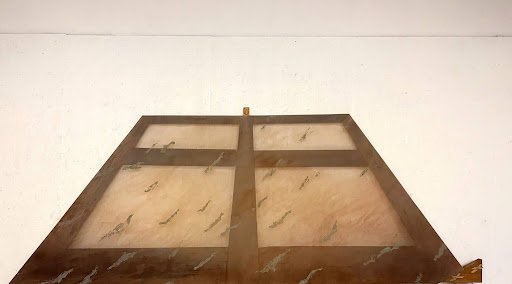
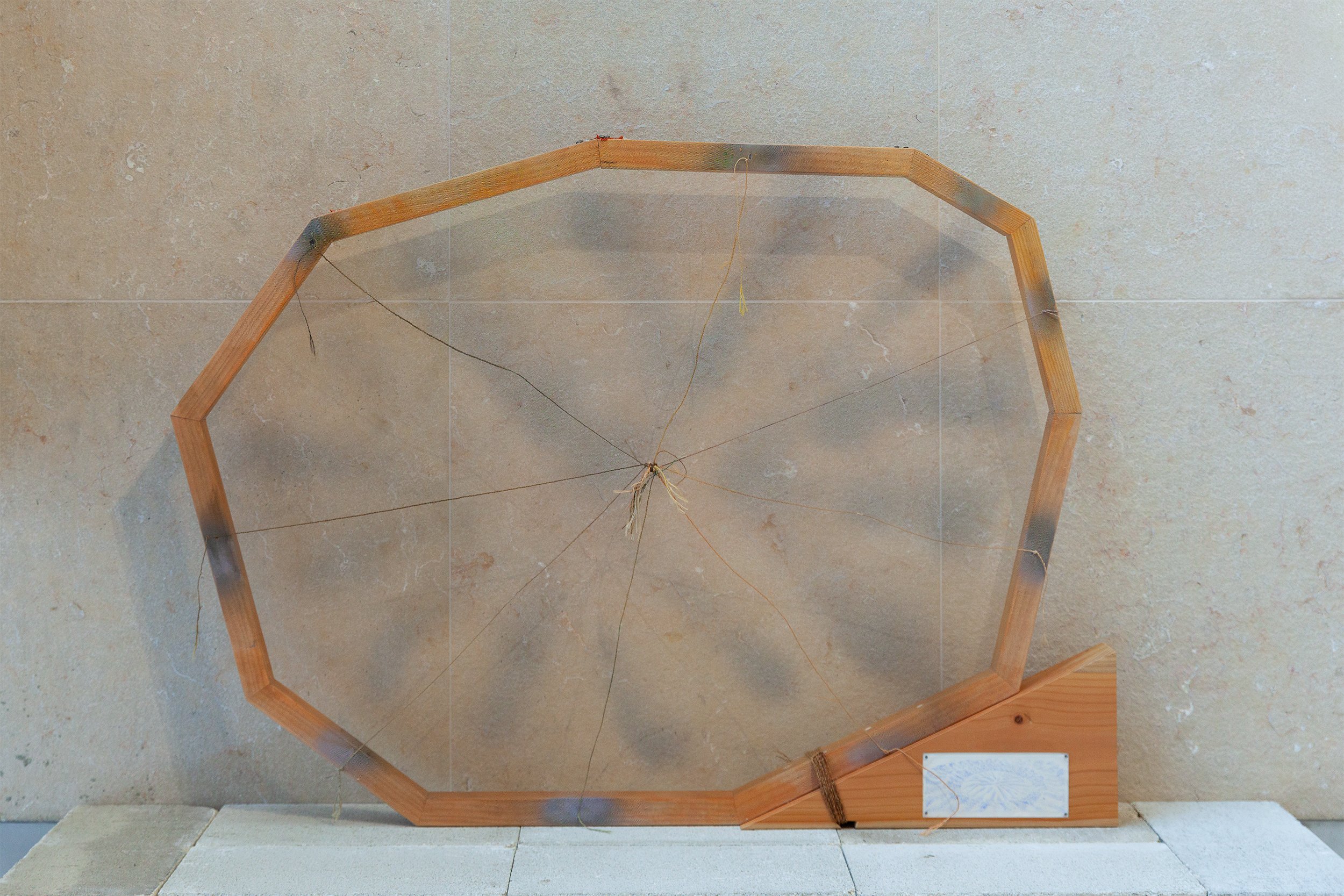
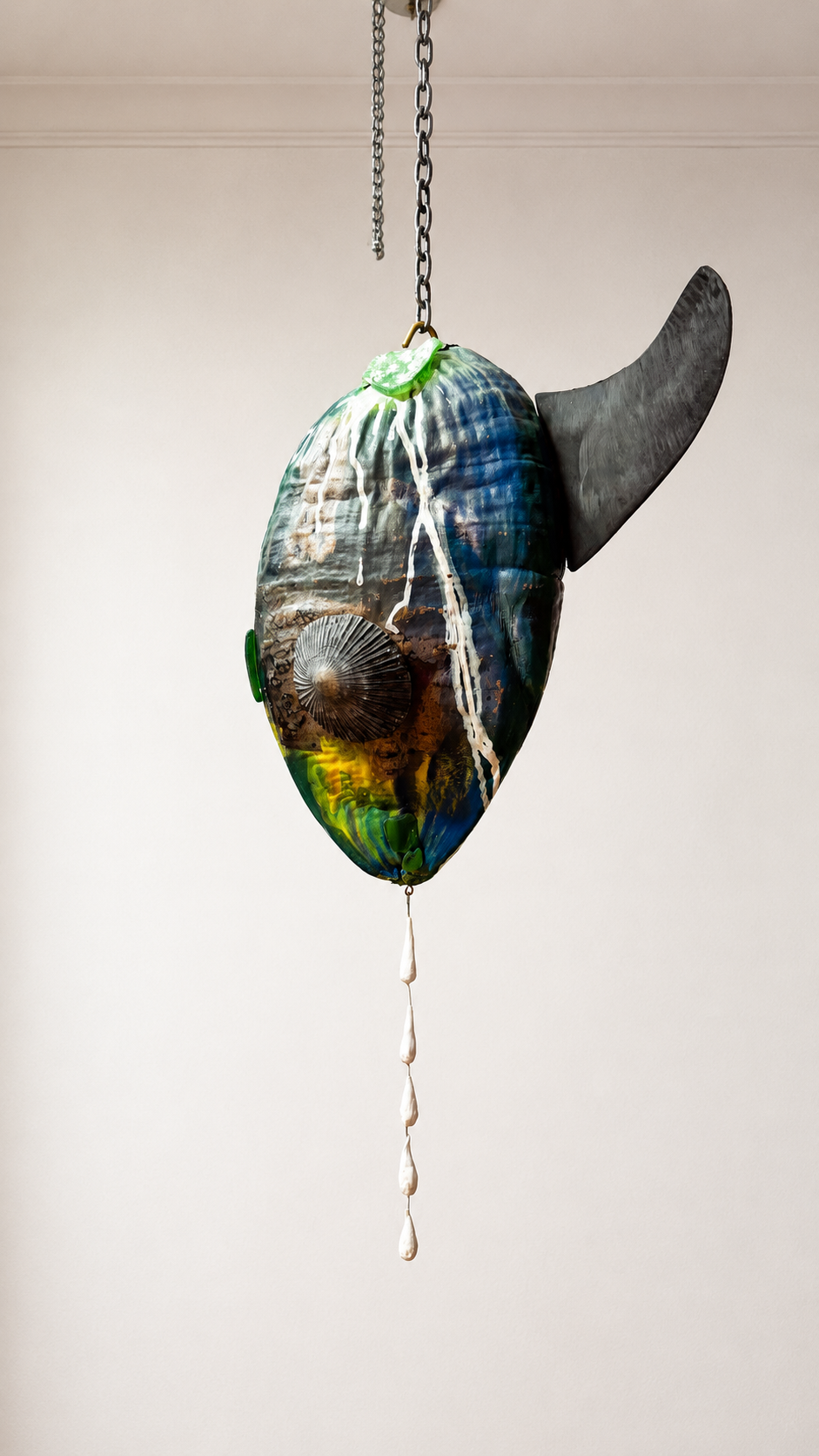
the door it all came through, 2026 Redwood from a plantation-era home in Mānoa, CNC carved ash, teak, strawberry guava, liquid nails adhesive, fabric, dirt from my grandpa’s house · 144 × 54 × 3 inlure for a pufferfish, 2025 Fabric, wood stretcher, douglas fir, colored pencil on paper, plexiglass, nails, dyed hau cordage, niu cordage, paint · 40 × 48 in
Nanea Lum
b. 1991, Kahaluʻu, Oʻahu · Native Hawaiian · kapa, painting, time-based media
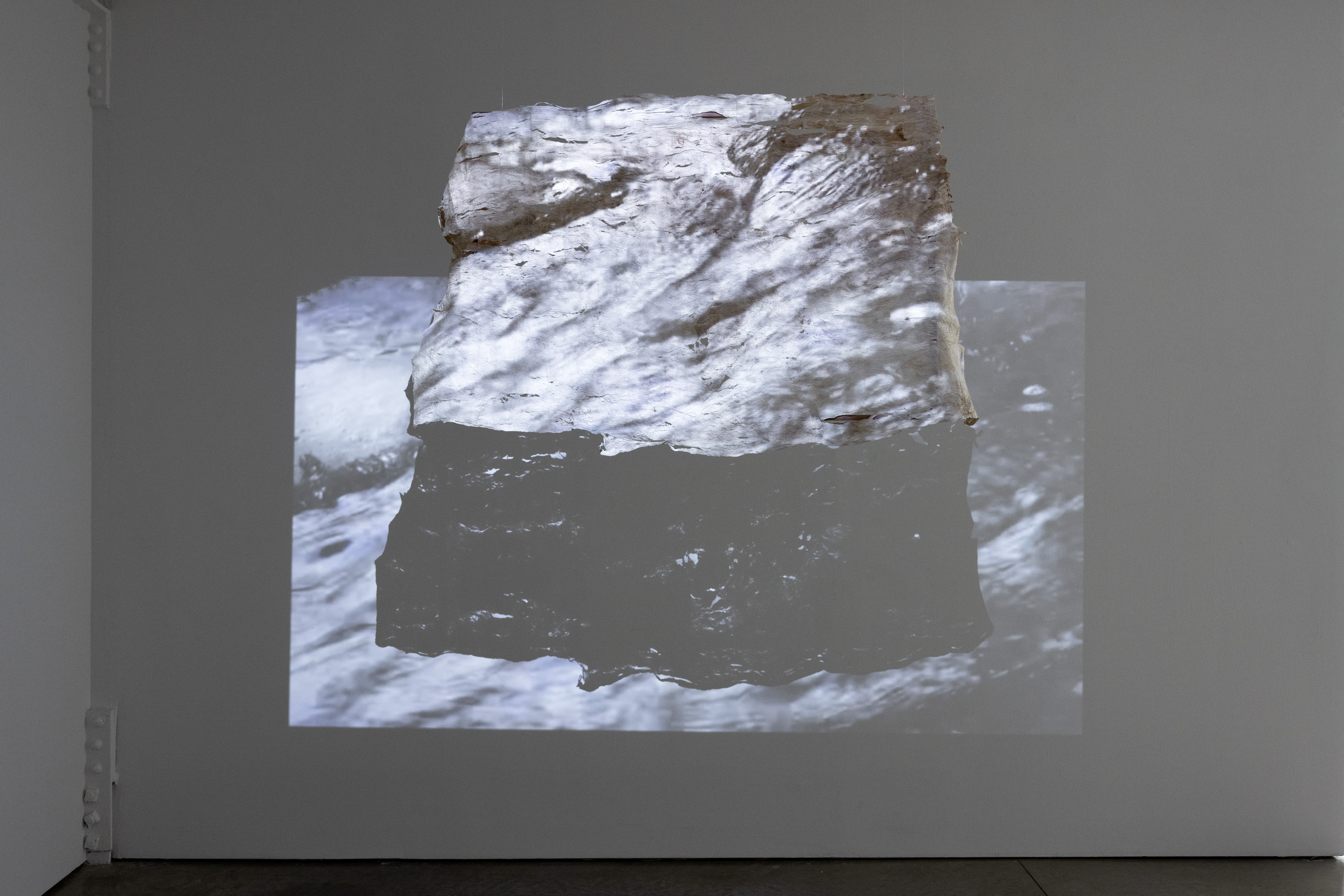
One of the exhibition's conceptual anchors. Kapa (Hawaiian barkcloth), painting, and video that make process, time, and the ʻāina visible as a living system.
Education
MFA, University of Hawaiʻi at Mānoa
Selected Recognition
Hawaiʻi Triennial 2025NACF LIFT Award 2023Ontopo, NADA New York
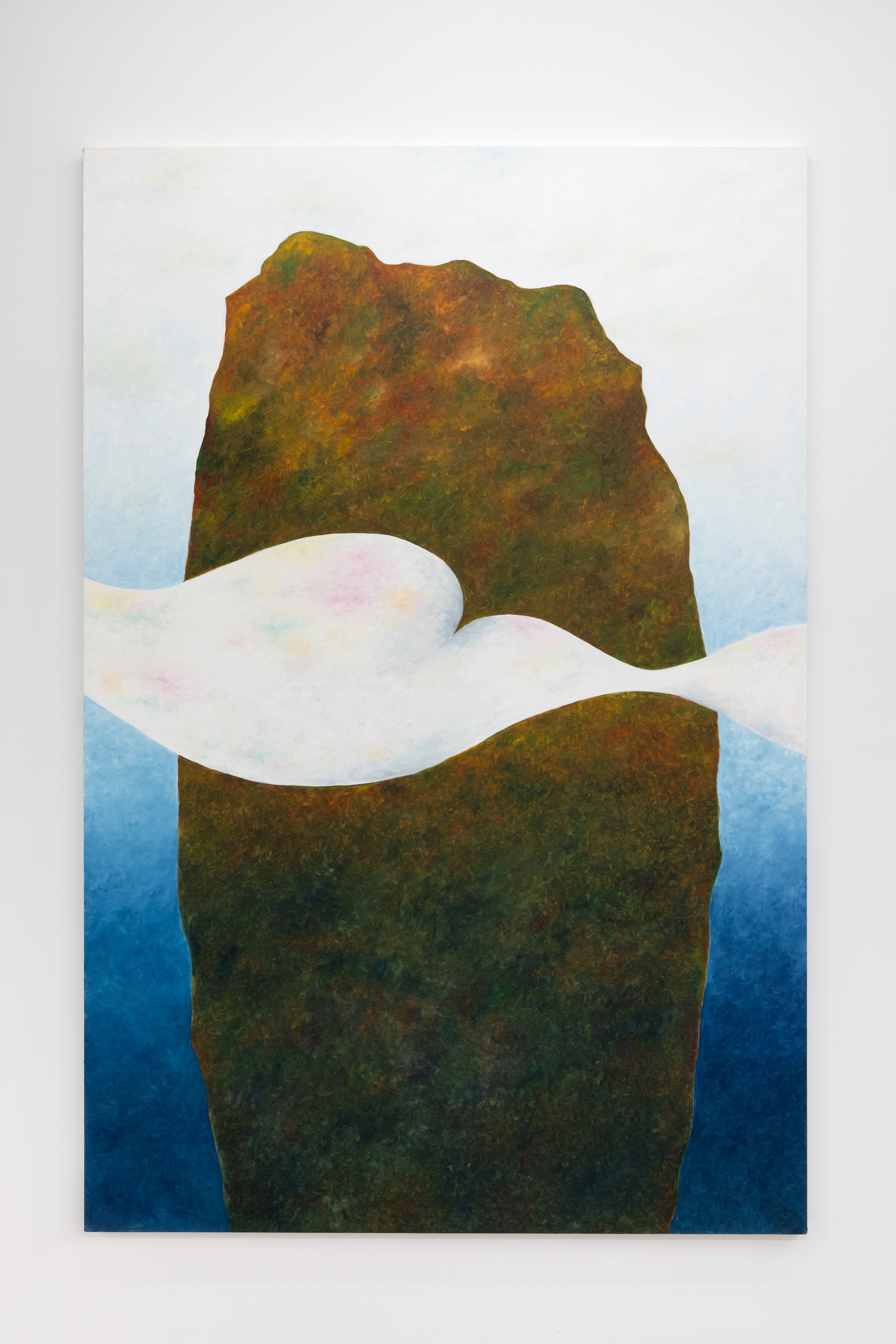
Koga bridges an earlier generation of Hawaiian landscape painting and the conceptual practice of the artists here. A mentor whose work carries histories that exceed their surfaces.
Passing Cloud II, 2026 · Oil on canvas, 72 × 48 in. Also exhibiting Passage, 2025 · Oil on canvas, 24 × 20 in.
CalArts BFAUCLA MFA (Ceramics)Grand Central Art Center 2026Co-founder, fishschool Hawaiʻi
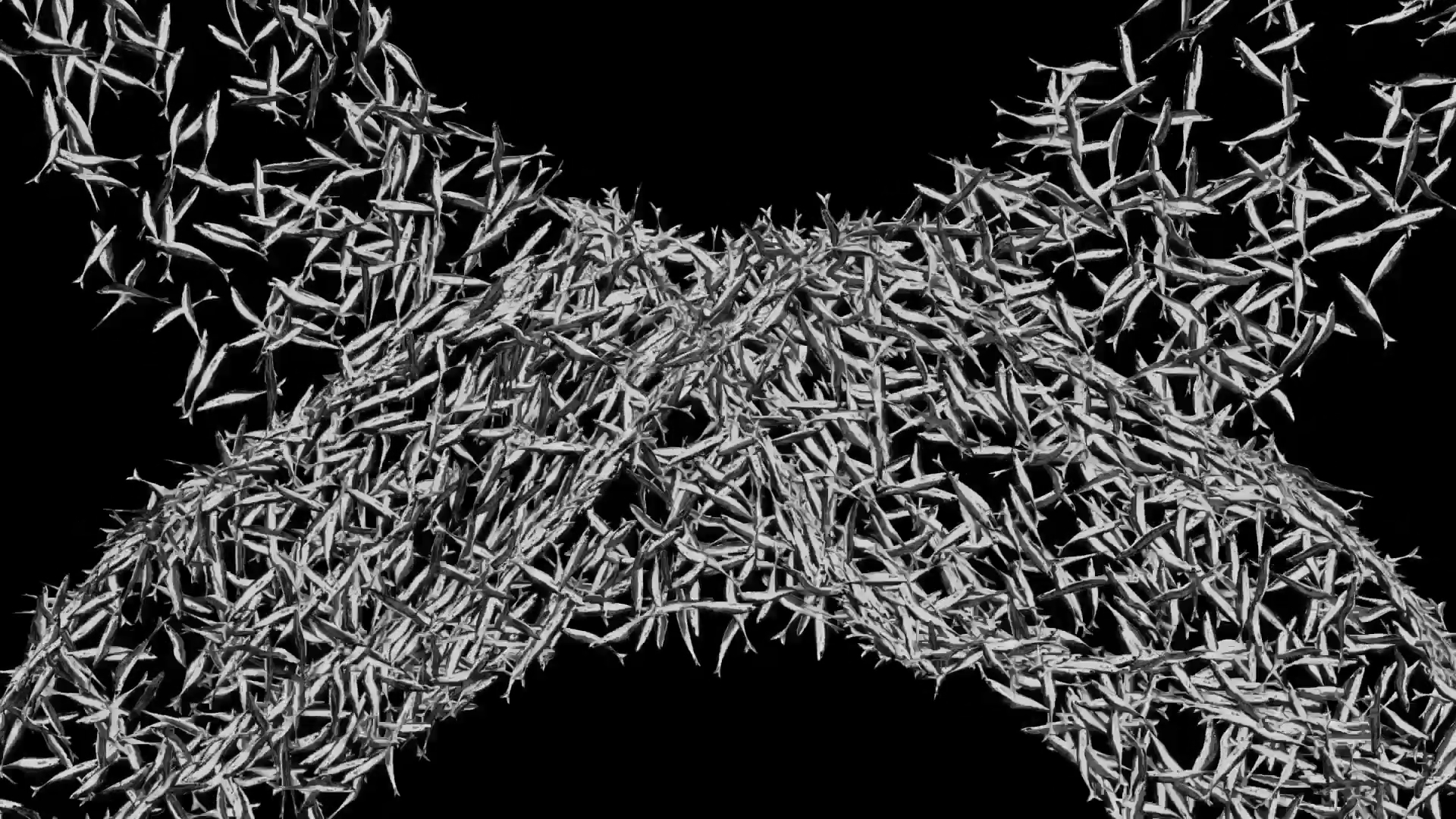
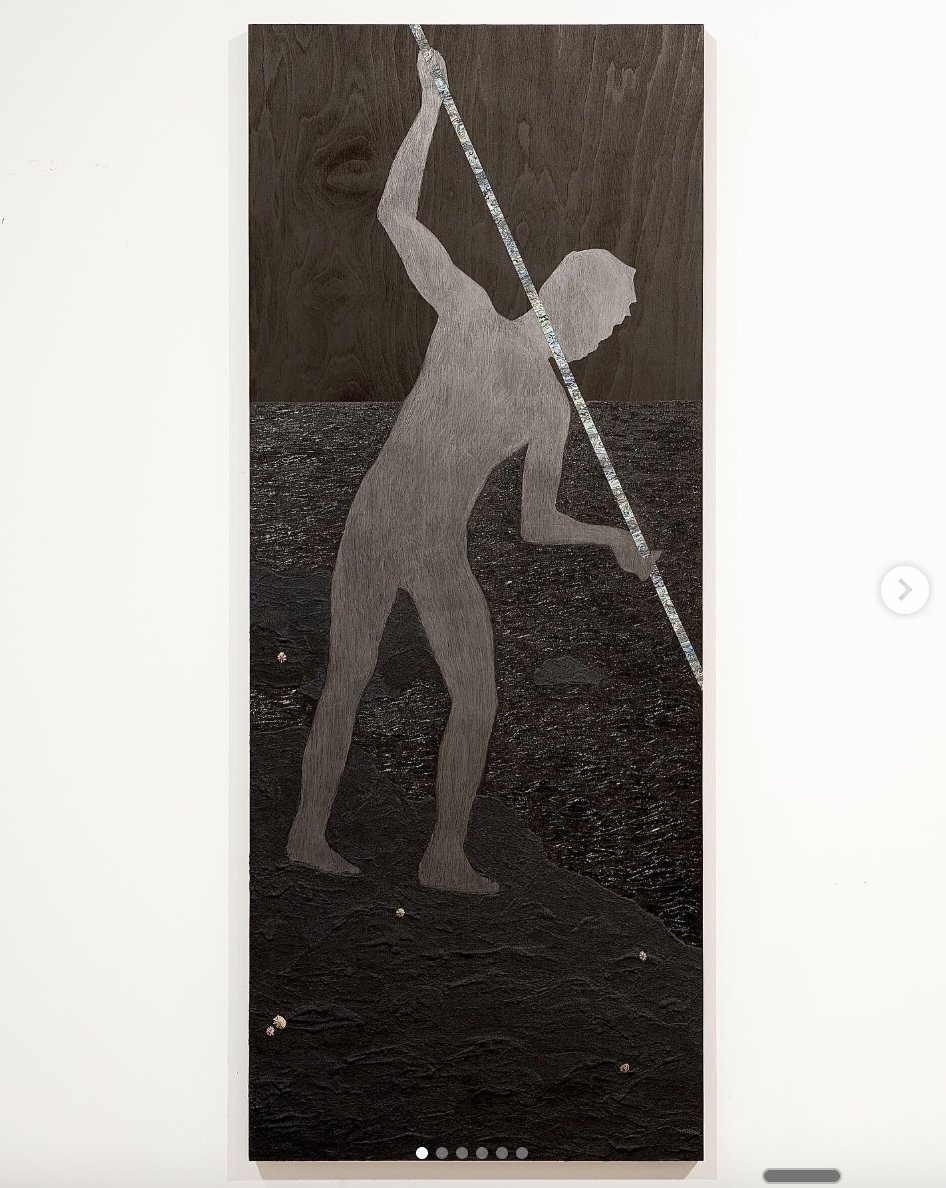
Night Fishing at Puʻuloa, 2026 Sumi ink, graphite, sand, mother of pearl, ʻopihi shells, pumice, gloss medium, and crackle medium on wood panel · 24 × 60 in (each)
The exhibit was organized by curator and graphic designer Jon Santos, who saw it as a way to bridge his life in Honolulu with his life in the East Coast art scene. HPR spoke with Santos to learn more about the exhibition and to hear how he carved a niche for himself as an art dealer for local contemporary artists.




.jpg)
